Last updated: November 16, 2026
Quick answer: In about 2 minutes, you can usually reduce sinking by using wide-foot swivel pads, a ground footprint spreader, or an anti-sink ground mat to spread the load before the legs touch mud or sand. If the surface is soft enough to swallow the feet, the fix is not “stronger legs”; it is more contact area under each leg and a flatter base under the whole seat. For the safest setup, check the chair’s load rating and, if the ground is very soft, choose the widest support that fits the leg shape.
Key takeaways
- Soft ground fails under point pressure, so the cure is to spread weight across a wider patch.
- A single add-on can help, and a wider setup can sometimes combine foot pads with a mat or foot spreader.
- Mud and dry sand need different tactics: mud wants a broad, firm base; sand often needs a larger footprint and a little digging-in control.
- DIY fixes can work, but they are worth using only when the bracket and leg joint stay stable, and it is wise to check the setup before sitting.
- If the feet keep disappearing, the ground is weaker than the load path, so the support under the legs has to change.
Why do the feet sink at all?
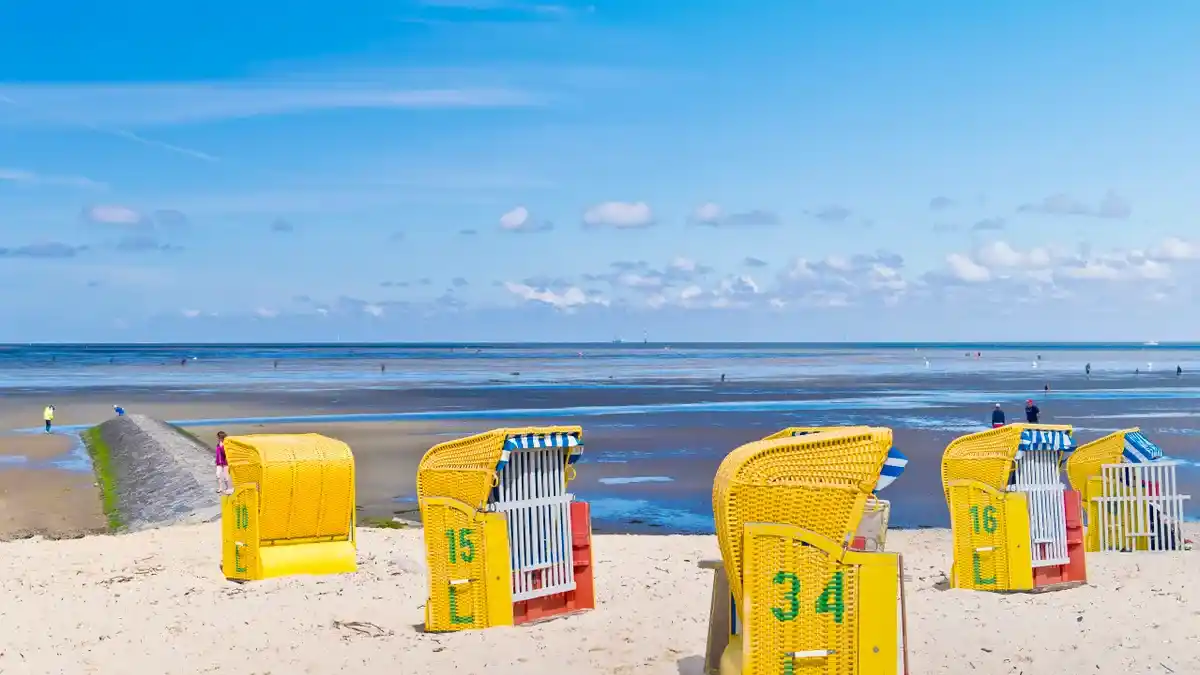
The feet sink because the ground under each leg cannot hold the load on such a small contact patch. A heavy-duty camp seat can still put a lot of force through four narrow points, and mud or sand gives way long before the frame does.
The key idea is surface-area-to-weight ratio. More contact area means less pressure on the soil, which is why wide-foot swivel pads, pvc ground feet, and a ground footprint spreader work better than bare tips. A soft beach or wet campsite does not care how sturdy the frame looks if each leg is pressing through a tiny circle of plastic or metal; the USDA Natural Resources Conservation Service explains the same pressure-and-compaction principle in soil terms at https://www.nrcs.usda.gov/.
This is also why “heavy-duty” does not automatically mean “stable on soft ground.” A model rated for 400+ lbs can still tip or sink if the feet are small and the leg joint brackets take the strain from an uneven base. The frame may hold the person, but the ground may not hold the frame.
Mud is usually worse than packed sand because wet soil can liquefy around a foot. Dry sand shifts differently; it spreads, but it also lets the leg keep dropping until the contact patch grows. That difference is why the right fix for one surface can be only half a fix for the other. The USGS has a plain-language overview of sand behavior and sediment movement at https://www.usgs.gov/.
What should I put under each leg?
Put a wider pad under each leg, or set the whole footprint on a mat if the ground is soft enough to swallow single feet. For many people, a simple add-on that increases contact area without raising the seat so much that the frame becomes shaky is the best place to start.
The main options are straightforward:
| Option | What it does | Best for | Main drawback |
|---|---|---|---|
| Wide-foot swivel pads | Spreads load under each leg and helps on uneven ground | Mud, wet grass, mixed campsite soil | Can still sink in deep sand if the pad is too small |
| PVC ground feet | Adds a broader base using a rigid sleeve or cap | DIY setups, short trips, low-cost fixes | Fit matters; a loose cap can shift under load |
| Anti-sink ground mat | Gives all legs one shared support zone | Soft sand, beach camps, very loose soil | Bulky to carry; can trap grit and water |
| Ground footprint spreader | Links the legs to a larger footprint | Uneven mud, soft dirt, heavier users | More setup time; can be awkward in tight spaces |
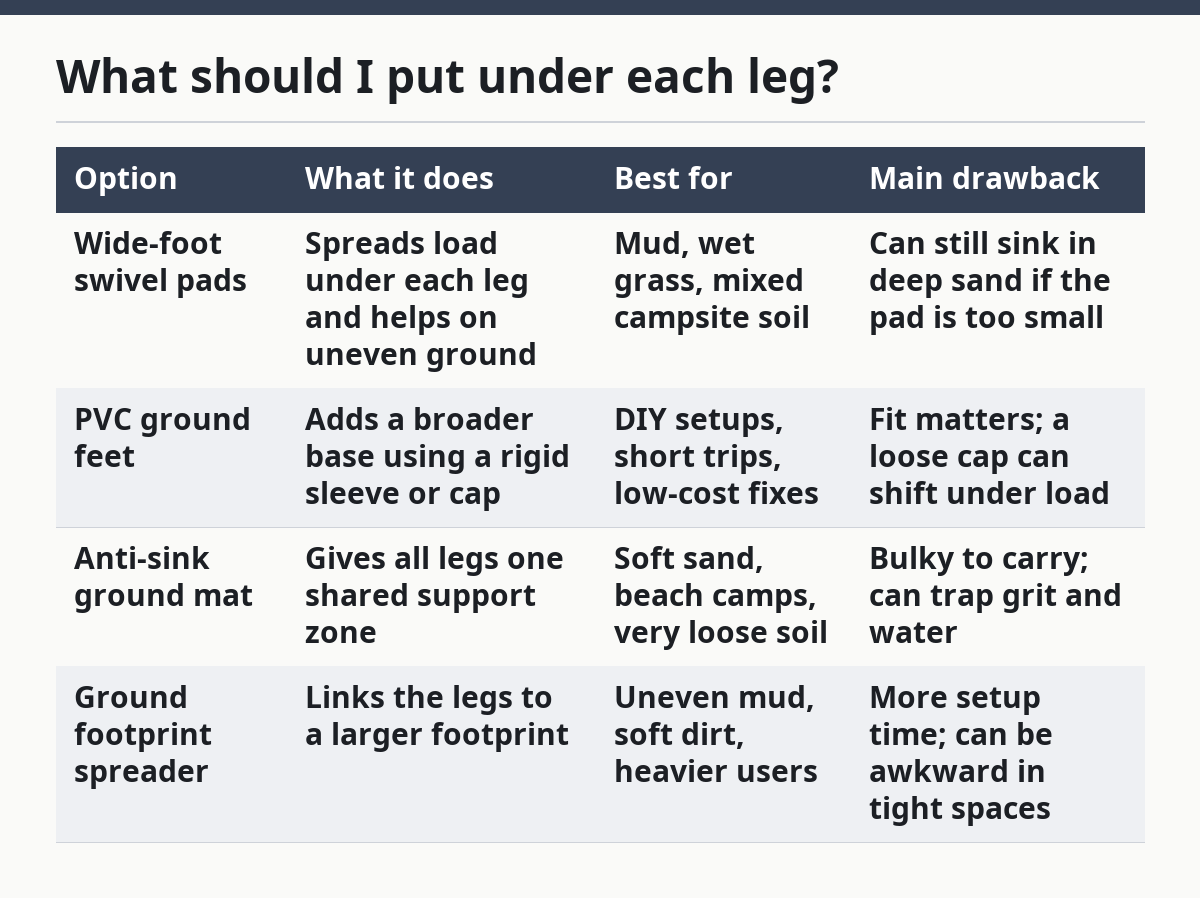
The best choice depends on the ground, not on the label on the seat bag. For sand, a mat or spreader is often more useful than one small cap on each leg. For mud, a broader foot with some grip can work better than a slippery plate that shifts as soon as the leg loads up.
The honest trade-off is weight and bulk. A bigger base is safer on soft ground, but it is less convenient to pack. If the only goal is keeping the frame upright for a short sit, small pads may be enough; if the goal is a long stay on soft sand or wet mud, plan on carrying something larger than bare foot tips. For a deeper comparison, see the heavy-duty outdoor chairs guide.
How do I set it up so it actually works?
Set it up by building a wider base before you sit down, not after the leg has already sunk. The setup takes a few minutes, and the result should be a level seat that stops dropping when weight shifts from one side to the other.
- Clear the ground where each leg will land. Remove rocks, roots, shells, and sharp debris so the support does not tilt on a single hard point.
- Place the anti-sink ground mat or footprint spreader flat first. If you are using a mat, smooth it out so it lies in one plane instead of wrinkling under load.
- Fit wide-foot swivel pads or pvc ground feet onto each leg. The pad should sit centered, not cocked to one side.
- Set the legs down slowly and check that each foot lands on the same support surface. If one leg misses the mat, the whole frame can rack to one side.
- Press down gently on the seat before sitting fully. The base should settle a little, then stop instead of continuing to sink.
- Shift your weight once, then check the feet again. If the front legs drop deeper than the rear, move the whole setup to firmer ground or use a larger spreader.
- For sand, keep the base level and avoid twisting the legs into the surface. Twisting can make a small hole bigger, which defeats the pad.
- For mud, do not force the feet downward to “stabilize” them. That usually makes the hole deeper and increases stress on the lower joints.
A plain surface is better than a clever one that bends under load. If the mat folds, the pad slips, or the frame rocks, the setup is too small for the ground. The fix is more footprint, not more force.
Which fix works best in mud vs. sand?
Mud usually responds best to a wide, stable foot; sand usually needs a larger shared base. The difference matters because mud compresses and flows, while sand shifts and spreads under the foot in a different way.
In mud, the target is to stop a leg from punching through the top layer. A broad pad with a flat underside helps because it reduces pressure and gives the wet surface less room to collapse. A footprint spreader also helps by keeping the legs from acting like four separate punches into the same soft patch.
In sand, one small foot pad can still sink if the contact area is too small. An anti-sink ground mat or a spreader that joins the legs into one larger footprint is often the better move because it turns four tiny supports into one broad one. That matters on beaches where the top layer keeps shifting as soon as weight lands.
Here is the simple rule: if the ground closes around the foot, go wider; if the ground is slippery and uneven, go flatter and steadier. A narrow fix may feel fine for one sit, then fail when someone leans back, reaches sideways, or gets up and sits down again.
This is also where heavy-duty outdoor chairs guide content belongs, not here. This page is about stopping sinking, not choosing the whole seat. The point is support under the legs, and the support has to match the surface.
Can I make DIY camp chair stabilizer pads?
Yes, but only if the DIY pad is wide enough, flat enough, and secure enough to stay under load. A homemade fix that slips can be worse than no fix at all because it changes the way the legs load the frame. If you are unsure, it is safer to consult a professional or a knowledgeable gear shop and follow the maker’s instructions.
A DIY camp chair stabilizer pad often uses rigid pvc ground feet, a cut board, or another flat spreader piece that sits under each leg. The useful part is not the material itself; it is the extra contact area. A 2-inch tip does very little on loose sand, while a much broader base changes how the load reaches the ground.
The danger is making the pad too soft, too tall, or too loose. A squishy layer can twist and shift. A tall stack can raise the seat and make the base feel tippy. A loose fit can let the leg slide off the pad when someone leans to one side.
A simple test before use is to press down with one hand and watch the foot. If the pad rotates, squirms, or sinks unevenly right away, it is not ready for sitting. A good DIY fix should sit squarely, stay level, and keep the leg centered without drama.
DIY is a sensible choice for a short trip, a spare setup, or a budget fix. It is not the right answer when the ground is very soft, the load is high, or the frame already flexes at the leg joints. In those cases, a purpose-built anti-sink ground mat or a better footprint spreader is the safer bet.
What mistakes make sinking worse?
The biggest mistake is using small feet on soft ground and expecting the frame to hold itself up. That usually costs you a tipped seat, a crooked stance, and extra stress on the leg joint brackets.
Another common error is setting the legs on different kinds of ground. One foot on hard dirt and three on mud sounds harmless, but the uneven load can twist the frame. When that happens, the seat feels unstable even before the feet start to sink.
People also make the setup too narrow. If the base stays the same width as the original feet, the add-on may do little more than slow the sinking. A true fix has to increase the footprint enough that the load spreads beyond the weak top layer of the ground.
A final mistake is forcing the legs deeper because the seat feels wobbly. That can make the hole bigger and increase strain on the lower hardware. If the support keeps disappearing, the answer is a larger pad or a firmer spot, not more pressure.
The honest limit here is simple: some mud is too soft, and some sand is too loose for a small portable seat without a broad support base. If the ground collapses under your hand, it will not behave better under full body weight.
When is a bigger base worth carrying?
A bigger base is worth carrying when you know the ground will be loose, wet, or churned up by traffic. If the campsite is hard-packed, the extra bulk may not be worth it, but on sand or mud it can save a lot of annoyance.
This is the trade-off most readers miss. A ground footprint spreader or anti-sink ground mat takes up room, and that is a fair cost for stability. The penalty is packing space, not just weight, and that matters on short walks from the car or when every inch of the bag is already spoken for.
A larger base is also worth it when the load is higher or the frame has long, narrow legs. That shape concentrates pressure. Spread it out, and the same setup behaves much better on soft soil.
I would not choose a bigger base for a hard, dry surface unless the ground changes often during the day. On a firm campsite, a simple pad may be enough. On a beach, marsh edge, or wet field, the larger support is usually the better call.
What kind of support should I buy first?
The first thing to buy is the fix that matches your ground: wide-foot swivel pads for mixed terrain, a ground footprint spreader for unstable mud, or an anti-sink ground mat for sand. If the goal is one item that helps on many surfaces, the spreader-plus-pad approach is often the most flexible.
For a reader who wants the simplest upgrade, wide-foot swivel pads are the easiest place to start because they add support without changing the whole setup. For a reader dealing with beach use, the mat matters more because sand keeps shifting under separate feet. For someone who wants a low-cost workaround, pvc ground feet can be useful if they fit snugly and stay centered.
The wrong choice is buying for the label instead of the ground. “Heavy-duty” on the seat does not tell you how the feet behave in sand. The support under the legs is its own problem, and that is the part that keeps a seat from disappearing into the soil.
If you want a broader buying guide for the full seat, the heavy-duty outdoor chairs guide on this site covers that larger decision. This page stays focused on the part that stops sinking.
Why do heavy-duty camp chairs sink so easily?
Heavy-duty camp chairs sink so easily because the load still passes through small feet, and soft ground fails under pressure. A frame can be strong and still press through mud or sand if the contact area is too small.
The weak point is usually the ground, not the seat rating. Wet soil and loose sand give way as soon as the foot concentrates weight into a small spot, which is why wider pads or a larger footprint help more than a tougher fabric shell.
What size foot pad is needed to hold 400 lbs on sand?
The needed pad size depends on the sand, the frame shape, and how much the load shifts when you sit down, so there is no single safe number to quote honestly. A pad that is too small can still sink even if the seat itself is rated for 400+ lbs.
The practical answer is to use the widest stable support you can fit without making the base wobbly. On sand, an anti-sink ground mat or footprint spreader is usually more dependable than a small cap at the end of each leg.
Drafted with AI; not yet reviewed by a person.