For people over 6’4″, the specs that matter most are seat height range, backrest height, and gas-cylinder stroke length — not a vague “made for tall people” label. OSHA’s own computer-workstation purchasing guide calls for seat height adjustable from 15 to 22 inches and a backrest extending at least 17.7 inches above the compressed seat pan. Checking a chair’s actual numbers against those baselines tells you far more than marketing copy.
Key Takeaways
- OSHA’s Computer Workstations eTool purchasing guide specifies seat height adjustable from 15 to 22 inches, a seat pan 15 to 17 inches long, and a backrest extending at least 17.7 inches above the compressed seat pan (14.2 inches wide, per ANSI).
- Cornell University’s ergonomics program ties the right seat height to your popliteal height — the underside-of-knee-to-floor measurement when seated with feet flat — rather than to total body height alone, and frames typical adjustable chairs as spanning about 9 inches of range.
- Gas-cylinder stroke length sets how much height range a chair actually has. One cylinder manufacturer, allchairparts.com, lists stroke sizes from about 65mm to 120mm (roughly 160 to 215mm of total travel depending on model) — ask for this number if it isn’t published.
- A real big-and-tall example: HON’s Ignition 2.0 Big & Tall lists a seat-height range of 17 to 21.5 inches, useful as a concrete comparison point against OSHA’s general 15-to-22-inch guidance.
- Height and weight capacity are separate specs. OSHA’s own guide states that users over 275 lb need a chair specifically designed for extra weight support — check that separately using our weight-capacity guide.

Why Doesn’t Height Alone Tell You What Chair You Need?
Two people who are both 6’5″ can need different seat heights, because the number that actually matters is popliteal height — the distance from the floor to the back of your knee when you’re seated with your feet flat — not your total height. Cornell University’s ergonomics program builds its chair-height guidance around this measurement rather than overall height, and notes that “optimum seat height is controversial” even among ergonomics researchers, since leg length varies independently of total height.
That’s why a single “best chair for people over 6’4\”” recommendation can’t really exist — what you need to check is whether a specific chair’s adjustment range covers your actual leg length, not just whether a brand markets the chair as “tall-friendly.”
What Seat-Height Range Should I Actually Look For?
OSHA’s Computer Workstations eTool purchasing guide gives a concrete baseline: “seat height should adjust from 15 to 22 inches.” That’s a government ergonomics guide, not a chair brand’s marketing claim, so it’s a solid number to measure any chair against. Cornell’s ergonomics program frames the usual adjustable range differently — about a 9-inch span of travel, typically starting near 15 inches — and ties the top end of that range to the user’s popliteal height rather than a fixed ceiling.
For comparison, HON’s Ignition 2.0 Big & Tall — a real big-and-tall chair with a published spec sheet — lists a seat-height range of 17 to 21.5 inches. That’s narrower than OSHA’s 15-to-22-inch general guidance on the low end, which illustrates why checking the actual number on a specific chair matters more than assuming “big and tall” automatically means “taller range.”
| Source | Seat-height guidance | What it’s based on |
|---|---|---|
| OSHA Computer Workstations eTool | 15 to 22 in. adjustable | General government ergonomics purchasing guidance |
| Cornell University ergonomics program | ~9 in. span, typically starting near 15 in. | Popliteal height matching; notes optimum height is debated |
| HON Ignition 2.0 Big & Tall (real chair) | 17 to 21.5 in. | Manufacturer’s own published spec sheet |
What About Backrest Height?
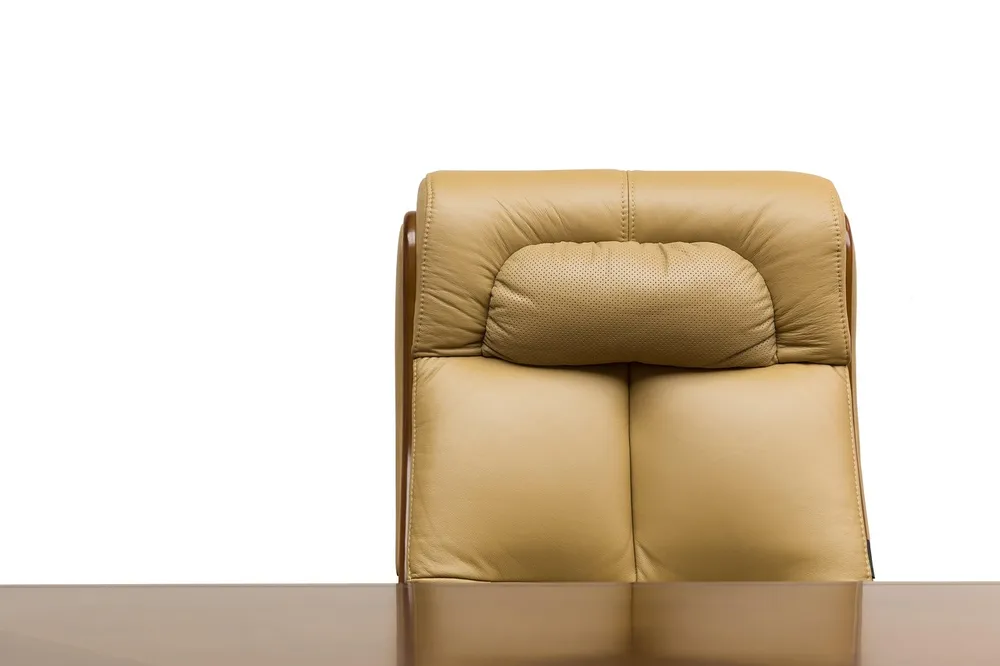
OSHA’s guide states the backrest top should be “at least 17.7 inches above the compressed seat pan and 14.2 inches wide,” citing ANSI. That’s the floor, not necessarily enough for a taller frame — taller users generally benefit from a backrest that clears that ANSI minimum by a comfortable margin, with a headrest extension if the chair offers one, rather than a backrest that just barely meets it. HON’s Ignition 2.0 Big & Tall, for comparison, lists a back sized 22.75 inches wide by 24.75 inches high — notably taller than the ANSI floor.
Does Cylinder Stroke Length Matter for Tall Users?
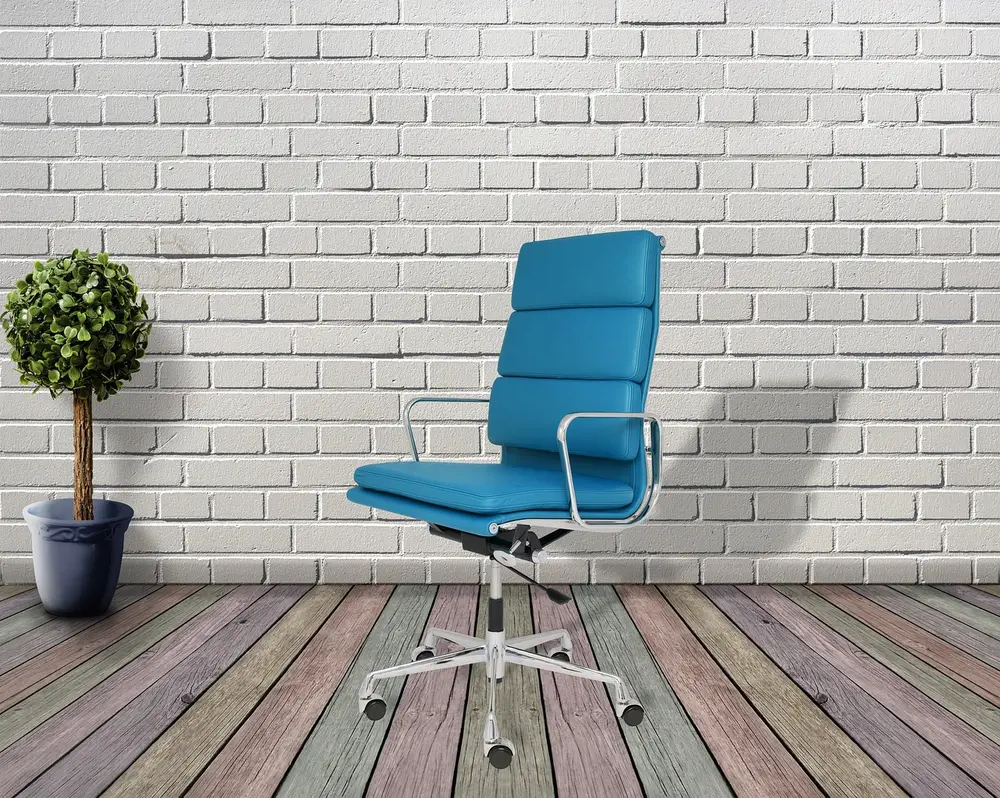
Yes — the gas cylinder’s stroke (how far it extends) sets the actual height-adjustment range, independent of what the seat foam or frame might suggest. According to allchairparts.com, a chair-parts manufacturer, its own cylinders come in stroke sizes of roughly 65mm, 85mm, 100mm, and 120mm, corresponding to about 160mm, 180mm, 195mm, and 215mm of total travel respectively. A longer-stroke cylinder gives more usable height range for the same chair frame. If a listing doesn’t publish a stroke or travel number, it’s worth asking the seller directly — don’t assume a “tall” chair automatically has the longest-travel cylinder available.
Practical Checklist for Shopping Over 6’4″
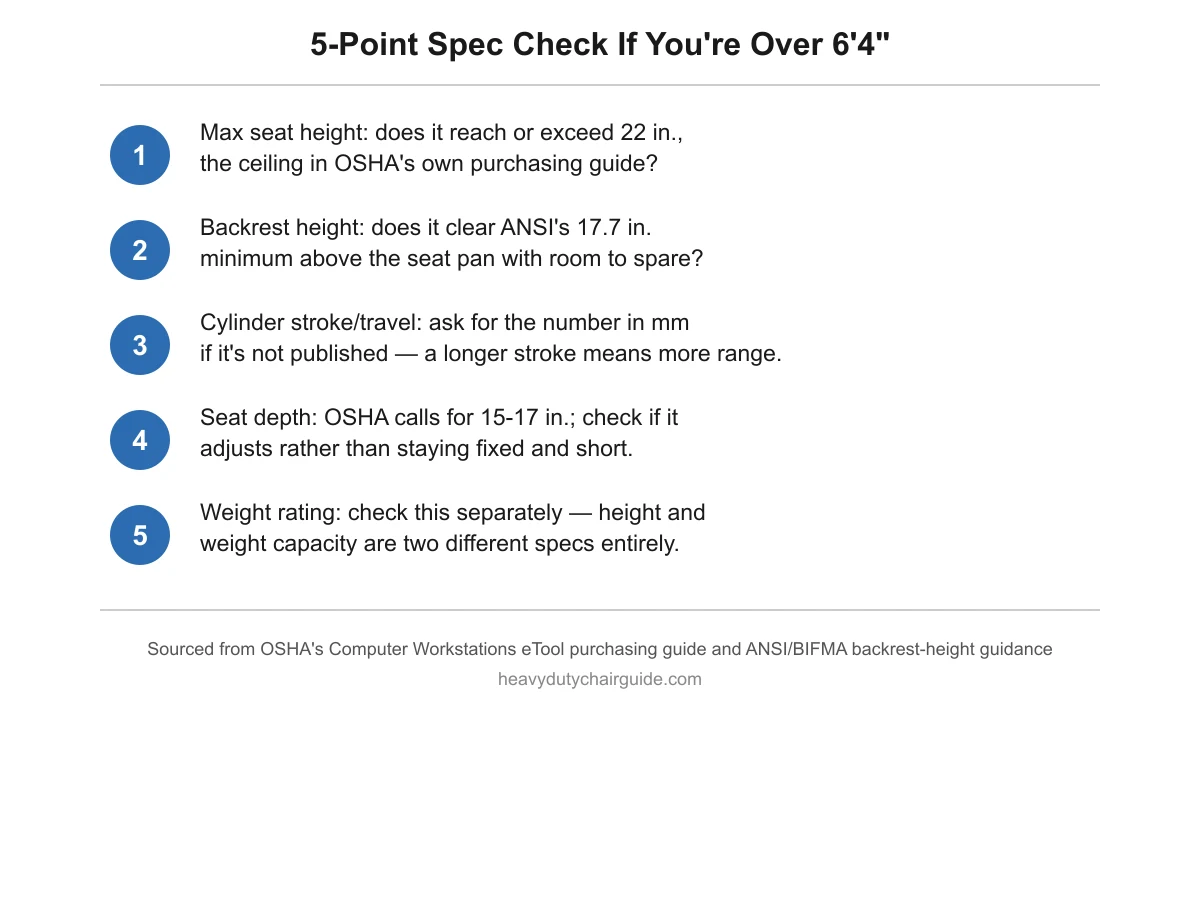
- Check the seat height range against OSHA’s 15-to-22-inch baseline — does the chair’s maximum reach or exceed it?
- Check the backrest height against ANSI’s 17.7-inch minimum — look for a comfortable margin above that floor, not just a pass.
- Ask for the gas cylinder’s stroke or travel number in millimeters if it isn’t listed on the spec sheet.
- Check seat depth separately — OSHA calls for 15 to 17 inches, and a taller frame often needs the upper end of that range or an adjustable slider.
- Confirm weight capacity as its own, separate spec — see our big and tall vs. standard comparison for how that number is actually tested.
If your situation is shorter stature but a higher body weight rather than extra height, the priorities flip — seat height and depth usually need to go down, not up. Our guide to chairs for a short, heavy body type covers that combination specifically.
FAQ
Is there one “best” chair for everyone over 6’4″?
No. Leg length (popliteal height) varies independently of total height, so the right seat-height range depends on your specific proportions, not just how tall you are. Check the actual adjustment range against your own measurements.
What’s the single most important spec to check first?
Seat height range. If a chair’s maximum seat height doesn’t reach where your knees need it to be, no other feature compensates for that — you’ll sit with your hips too low relative to your knees regardless of backrest or armrest quality.
Do big-and-tall chairs always have a taller seat-height range than regular chairs?
Not necessarily. HON’s Ignition 2.0 Big & Tall, a genuine big-and-tall model, lists a 17-to-21.5-inch range — the low end is actually higher than OSHA’s general 15-inch minimum, but the top end doesn’t exceed it. “Big and tall” branding tends to mean a higher weight rating more reliably than a taller seat range.
Why does backrest height matter if I already have good lumbar support?
Lumbar support addresses the lower back; backrest height affects whether your upper back and shoulders have support too. Taller users often need more total backrest height, with or without a separate headrest extension, to avoid the top of the backrest ending well below shoulder height.
Should I just buy the cylinder with the longest stroke I can find?
Only if your seat height otherwise falls short. A longer stroke increases the top end of your height range, but it also typically raises the minimum height too — check both ends of the range, not just the maximum.
Sources
- OSHA — Computer Workstations eTool, Purchasing Guide
- Cornell University Ergonomics — Ergonomics of Sitting
- allchairparts.com — gas-lift cylinder stroke and travel specifications
- HON Ignition 2.0 Big & Tall specifications, as reproduced by multiple independent authorized dealers (direct fetch of hon.com returned a blank page)
heavydutychairguide.com Editorial Team. Last updated: November 13, 2026.